


What Is Eps Sandwich Panel
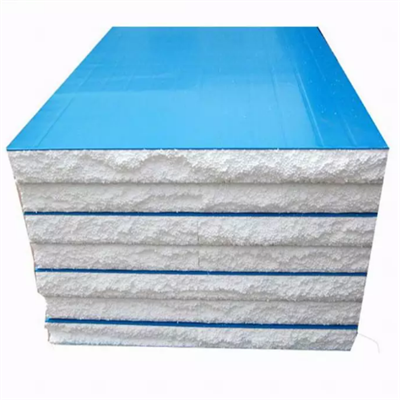
EPS Sandwich Panel. EPS (Polystyrene) Sandwich Panels are composed of 3 layers, the external and internal is two dyed Galvanized or Aluminum corrugated plates, and core Polystyrene (EPS) rigid foam.
Benefits of Eps Sandwich Panel
Excellent Insulation
One of the primary benefits of Eps sandwich panels is their superior insulation properties. This quality is especially crucial in the construction industry, where energy cost is a growing concern.
Energy Efficiency
Buildings are notorious energy guzzlers, with extensive energy wastage arising from the continuous need for heating and cooling.Eps sandwich panels provide an answer to reduce rising energy costs and carbon dioxide (CO 2 ) emissions in the atmosphere. These panels significantly curb CO 2 emissions during both the building phase and the lifetime use of the structure. According to data from the "PEP – Promotion of European Passive Houses – Energy Saving Potential," Eps sandwich panels can achieve up to:
● 40%* less CO2 emissions during the building phase
● 65%* less CO2 emissions during the use of the building throughout its lifetime
The exceptional thermal insulation properties of Eps sandwich panels can reduce energy consumption by up to 50%. The use of these panels results in highly energy-efficient buildings, ensuring savings of up to 80% in energy consumption over the building's lifespan. This not only helps reduce operational costs but also aligns with sustainability goals.
Environment Friendly
Eps sandwich panels are environmentally friendly construction materials. One of their primary components, Expanded Polystyrene, has received approval and certification from regulatory authorities and agencies for its low environmental impact. Some of the key environmentally friendly aspects of Eps sandwich panels include:
● 100% recyclability, resulting in zero waste during production
● Absence of chlorofluorocarbons (CFCs) and hydro chlorofluorocarbons (HCFCs), making it ‘Freon Free'
● Non-toxic properties, causing no harm to those who produce or work with it
● Inhibition of the growth of microorganisms and mold
● Substantially reduced water consumption compared to concrete buildings
● A smaller carbon footprint due to reduced concrete usage
Seismic, Fire, Heat, and Wind Safety
The combination of a lightweight EPS core and robust facing materials results in a structurally stable panel. This stability enhances the load-bearing capacity of the panels, making them suitable for various applications, including roofing and wall construction. Fire and Heat Resistant Wall Panels offer a range of safety advantages, making them a preferred choice for construction in areas prone to various natural disasters. These safety features include:
● Fire resistance, as the panels are self-extinguishing
● Earthquake resistance, thanks to their lightweight yet strong structure
● Heat resistance due to the inner core's insulating properties
● Soundproofing, making interiors acoustically protected
Cost Benefits
While the initial cost of Eps sandwich panels may be slightly higher than traditional construction materials, the overall cost-effectiveness becomes evident in reduced labor costs and shorter construction timelines. Additionally, the energy savings from improved insulation contribute to long-term cost benefits. Eps sandwich panels stand out as one of the most cost-effective building solutions due to several reasons:
● An extremely long lifespan, three times that of conventional buildings, resulting in fewer repairs over time
● Fast installation, saving approximately 50% of the time compared to conventional construction
● Minimal raw material wastage
● Reduced use of concrete, structural steel, and labor, translating to approximately 10% in savings
● Construction costs that are 10-15% cheaper than conventional methods
● An additional 10% in carpet area, delivering effective and substantial savings, particularly in metropolitan areas
Protection Against Natural and Man-Made Disasters
Eps sandwich panels offer a robust shield against a wide range of natural and man-made disasters, making them a highly reliable choice for construction projects. Their protective features include:
● Fire resistance
● Earthquake resistance, due to their lightweight yet durable construction
● Mould, termite, insect, and rodent resistance
● Protection against dampness
● Sound proofing to ensure interior tranquility
● Hurricane resistance
● Impact resistance for added durability
Quick Installation
Eps sandwich panels are known for their quick and easy installation. The panels arrive at the construction site pre-fabricated, reducing on-site labor and construction time. This makes them an attractive option for prefabricated buildings projects with tight timelines.




Why Choose us
Cutting-edge technology
We Have Excellent Teams Who Focus On Product Development & Design, Quality Control & Inspection And Company Running.
Quality Assurance
We can customize according to yourrequirements, and ensureproduct quality throughsystem technology test.
Expertise
Our team includes qualified and experienced professionals who are experts in their respective fields.
High-quality service
We deliver high-quality service, ensuring that our clients receive value for their investment.
Applications of EPS Sandwich Panel
External Wall
The raw materials for EPS, panel is heat preservation material, and honeycomb structure has good warm preservation and heat insulation function, which makes EPS. panel can automatically adjust the indoor moisture content by the change of the season and
climate, to make it possible to adjust the temperature In ecological regulation It has been Widely used In various combinations houses; low—level, duplex apartments, villas and urban residential buildings.
Internal Wall
The raw materials for Eps sandwich panel is heat preservation material. The structure has good warm preservation and heat insulation function which makes EPS, panel can automatically adjust the indoor moisture content by the change of the season and climate, to make it possible to adjust the temperature in ecological regulation. It has been Widely used in various combinations houses, low-level, duplex apartments, villas and urban residential buildings
Decking
Besides the basic superior performance such as sound insulation, waterproof. moisture proof, it also has high bearing capacity. antistatic. friction resistance, high strength, easy for wiring, anti-corrosion, anti-deformation, anti-cracks and other prominent advantages, which make it very suitable for floor in construction of factory, workshop, warehouse etc.
Roof System
Not only effectively solves the problem of roof leakage. ¡t is also heat insulation, warm preservation, junction surface Is flat and level, high temperature resistant, long life span. The light weight and high strength characteristics make ¡t possible to reduce the use of roof beam and other materials. Its simple construction and installation process, greatly shorten the construction period.
Ultra-high wall and Unique walls
The shock resistance is generally more than 1.5 times of traditional brick wall. The overall seismic performance is several times higher than ordinary masonry wall, which can meet Grade-8 magnitude Anchor installation with steel structure method can apply to super high, large span and abnormity wall projects.
Well pipe, fire control and equipment room
It is widely used in high-rise and super-tall building partition wall of well pipe, fire control and equipment room and other special location.
Understanding EPS Sandwich Panels: Definition, Composition, and Structure


EPS sandwich panels, also known as Expanded Polystyrene sandwich panels, are an innovative and versatile construction material widely used in various industries. In this comprehensive overview, we will delve into the advantages and applications of EPS sandwich panels, shedding light on their definition, composition, and structure.
Firstly, let us define EPS sandwich panels. These panels consist of three layers - two outer layers made of high-strength steel sheets and a middle layer made of Expanded Polystyrene foam. The outer layers provide immense structural strength and protection, while the middle layer serves as insulation, offering excellent thermal and soundproof properties. EPS sandwich panels are lightweight, durable, and easy to install, making them an ideal choice for numerous construction and industrial applications.
Now, let's explore the composition of EPS sandwich panels. The outer steel layers are typically galvanized or coated with a protective layer to resist corrosion and ensure longevity. These steel sheets come in a variety of thicknesses, allowing for customized strength and insulation requirements. The middle layer, which is the key component of this panel, is made of Expanded Polystyrene foam. EPS is a lightweight, rigid, and closed-cell insulation material known for its exceptional thermal insulation properties.
EPS sandwich panels are manufactured using a process called lamination. During this process, the Expanded Polystyrene foam is inserted between the two steel sheets, and the three layers are bonded together using an adhesive. This lamination process ensures a strong and secure connection between the layers, creating a solid and durable sandwich panel.
The structure of EPS sandwich panels plays a crucial role in their performance and versatility. The steel sheets provide structural integrity, allowing these panels to withstand high wind loads, resist impact, and maintain stability in demanding environments. The Expanded Polystyrene core offers enhanced insulation, effectively reducing heat transfer and minimizing energy consumption. This unique structure makes EPS sandwich panels an excellent choice for applications requiring thermal insulation, such as cold storage warehouses, temperature-controlled buildings, and refrigerated trucks.
Types of Eps Sandwich Panel
EPS (Expanded Polystyrene) Core Panels
Overview: EPS core sandwich panels feature a core made of expanded polystyrene, known for its excellent insulation properties. These panels find widespread use in residential and commercial buildings, offering cost-effective thermal insulation.
Applications: Ideal for roofing, wall cladding, and cold storage facilities.
PU (Polyurethane) Core Panels
Overview: Sandwich panels with a polyurethane core are prized for their exceptional insulation capabilities. The polyurethane foam provides a high level of thermal resistance, making these panels an energy-efficient choice.
Applications: Widely used in industries requiring temperature-controlled environments, such as warehouses and refrigeration units.
Mineral Wool Core Panels
Overview: Mineral wool core sandwich panels are recognized for their fire-resistant properties. Comprising mineral fibers, these panels offer robust insulation while ensuring safety in the event of a fire.
Applications: Ideal for structures where fire safety is a priority, such as industrial facilities and high-rise buildings.
Aluminum Honeycomb Core Panels
Overview: Featuring an innovative honeycomb core made of aluminum, these panels strike a balance between strength and weight. Their exceptional strength-to-weight ratio makes them suitable for diverse applications.
Applications: Commonly used in aerospace, marine, and architectural applications where lightweight yet strong structures are essential.
1. Regular Cleaning Routine
Gentle Cleaning Agents
Use mild cleaning agents with a pH level between 6 and 8 when cleaning Eps sandwich panels. Harsh chemicals may damage the panel's surface, affecting its appearance and performance.
Soft Brushes or Cloths
When cleaning, opt for soft brushes or cloths to avoid scratching the surface. Gently remove dirt, dust, or stains, paying attention to textured or 3D panels where debris may accumulate.
2. Inspection for Damage
Visual Inspections
Conduct regular visual inspections to identify any signs of damage, such as cracks, dents, or punctures. Early detection allows for prompt repairs, preventing further deterioration.
Sealing Joints
Check joints and seams where panels connect. Ensure that seals and caulking are intact, preventing water infiltration that could compromise the structural integrity of the panels.
3. Protection Against Impact
Avoiding Heavy Impact
Educate individuals working around Eps sandwich panels about the importance of avoiding heavy impact. While Eps sandwich panels are durable, excessive force can lead to damage that may require repairs.
Protective Measures
In high-traffic areas, consider installing protective measures such as bollards or barriers to minimize the risk of accidental impact.
4. Waterproofing Strategies
Light Weight Sandwich Roof Detail Decorating Wall Panels4.1 Proper Drainage Systems
Ensure that drainage systems are in place to prevent water accumulation near or around Eps sandwich panels. Standing water can lead to moisture-related issues, affecting both the appearance and structural integrity.
Sealant Application
Apply waterproof sealants to the panels, especially in areas prone to water exposure. This additional layer helps repel water and enhances the resistance of Eps sandwich panels to moisture.
5. Protection from UV Exposure
UV-Resistant Coatings
Consider applying UV-resistant coatings to Eps sandwich panels, especially when used in exterior applications. This protective layer helps prevent color fading and degradation caused by prolonged exposure to sunlight.
Shaded Areas
Where possible, design structures or installations that provide natural shade to Eps sandwich panels. Limiting direct sunlight exposure can contribute to their long-term preservation.
6. Timely Repairs and Replacements
Addressing Damage Promptly
If any damage is identified during inspections, address it promptly. Timely repairs prevent the escalation of issues and ensure the continued performance of Eps sandwich panels.
Periodic Replacements
In cases of severe damage or aging, consider periodic replacements of Eps sandwich panels. This proactive approach helps maintain the overall quality and functionality of the construction.
By incorporating these maintenance practices, users can extend the lifespan of Eps sandwich panels and maximize their benefits in various construction applications. Whether used for insulation, interior design, or exterior cladding, the longevity of Eps sandwich panels is closely tied to the care and attention they receive throughout their lifecycle.
Our Certificates

Our Factory
Shandong Hengjia Haya Building Materials Ltd. Was Founded In 2004 Year And Is Located In Zibo City, Shandong Province. We Have A General Investment Of 15 Millions And A Area Of More Than 7000 Square Meters, And More Than 20 Production Lines.
As A Professional Build Materials Supplier,Our Main Products Are Color Coated Steel Sheet, E P S / Rockwool / P U Sandwich Panels,Steel Structures, C / Z Purlins And All Kinds Of Steel Coils.
We Have Excellent Teams Who Focus On Product Development & Design, Quality Control & Inspection And Company Running. We Have Built A Modern Quality Management System Which Is In Strict Accordance With International Standards, We Have A Rang Of Well- Established Long- Term Relationships With Many Domestic Steel Companies .

Asked Questions
We're professional eps sandwich panel manufacturers and suppliers in China, specialized in providing high quality customized products. We warmly welcome you to buy high-grade eps sandwich panel for sale here from our factory. For price consultation, contact us.
Cold Room Eps Sandwich Panel, Eps Sandwich Panel for Workshop, foam sandwich panel